Worked examples
One question, taken all the way.
Each of these starts with a case simple enough to do on paper, then changes one thing so that the paper method stops working. The formula is derived, the keystrokes are given in full, and where a graph adds something it is used as an independent check — because an answer you have only seen once is a number you are trusting, not a number you know.
-
 Money · GCSE to real life
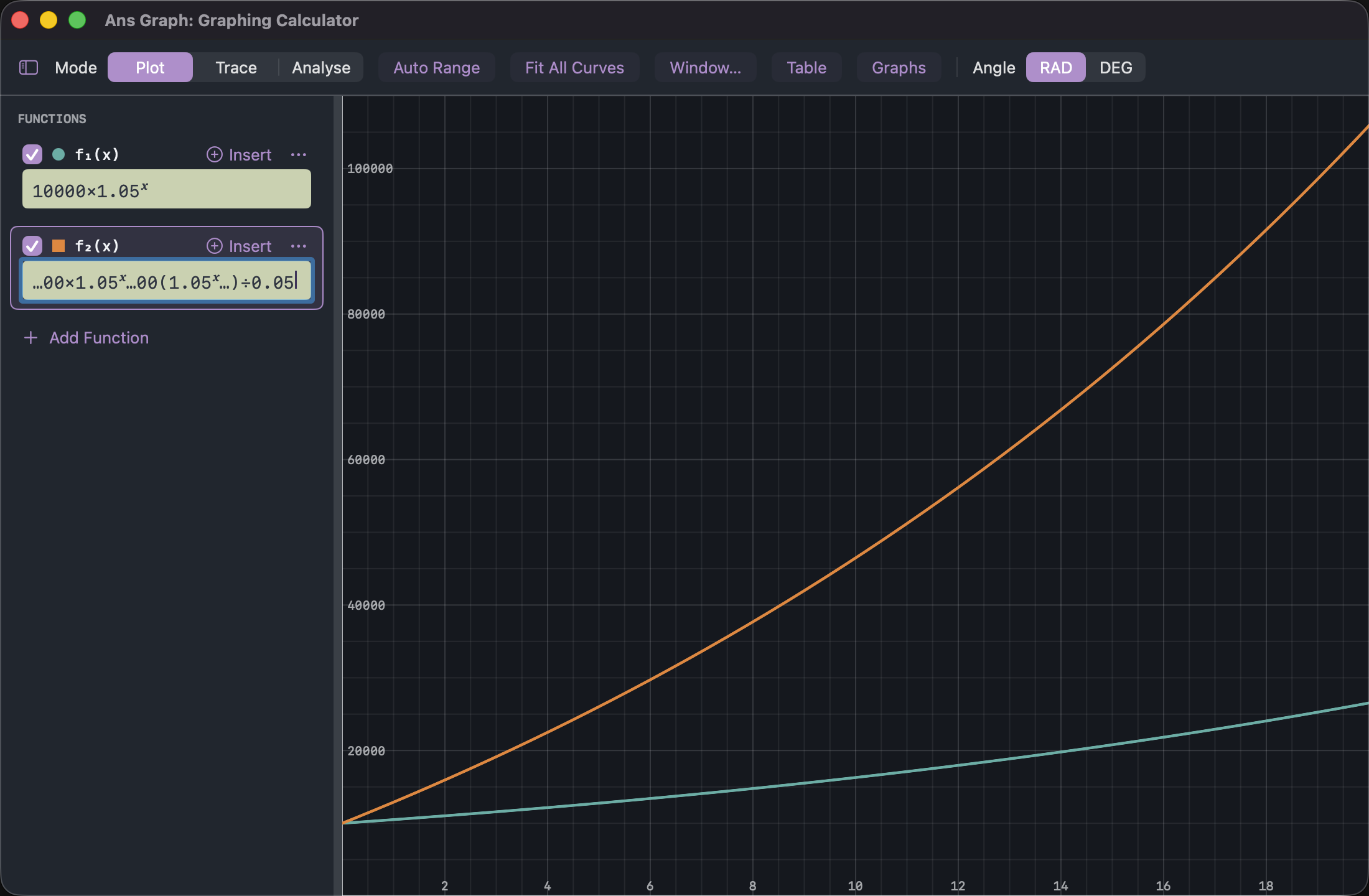
Compound interest: what £10,000 becomes in 20 years
The formula from first principles, then the £26,532.98 answer, then what changes when you pay in £200 a month — and what an annual percentage charge is really levied on.
-
 Physics · GCSE to A-level
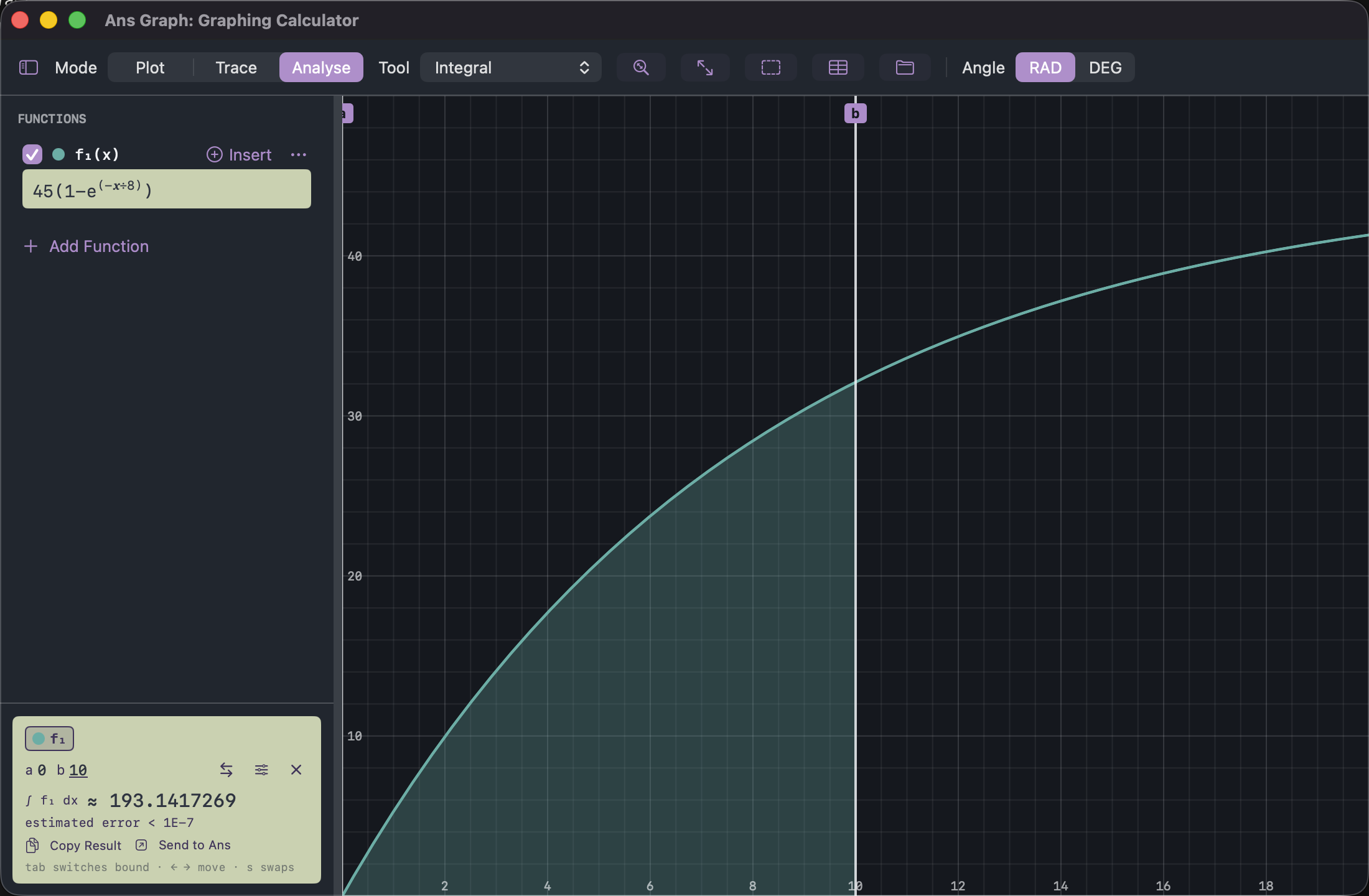
Area under a velocity–time graph, when it isn't a triangle
The rectangle-and-triangle method first, then a real car whose drag grows with speed, then constant thrust in space — where the triangle is out by 33 metres and then by 85 kilometres.
-
 Money · Real life
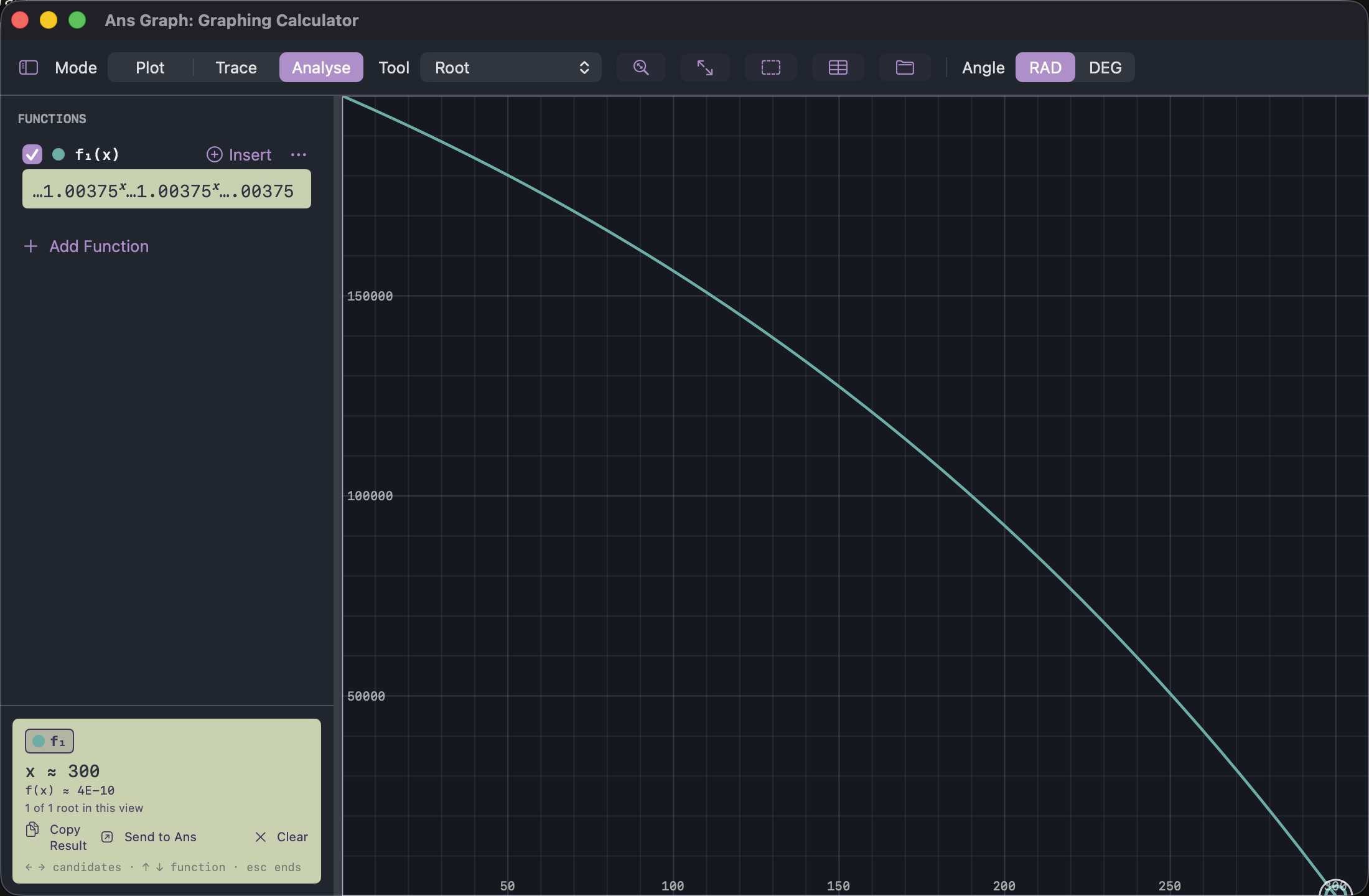
Mortgage repayments: where the money actually goes
Why £200,000 at 4.5% costs £1,111.66 a month, why ten years of paying it clears less than a third of the debt, and what choosing a 30-year term really costs.
-
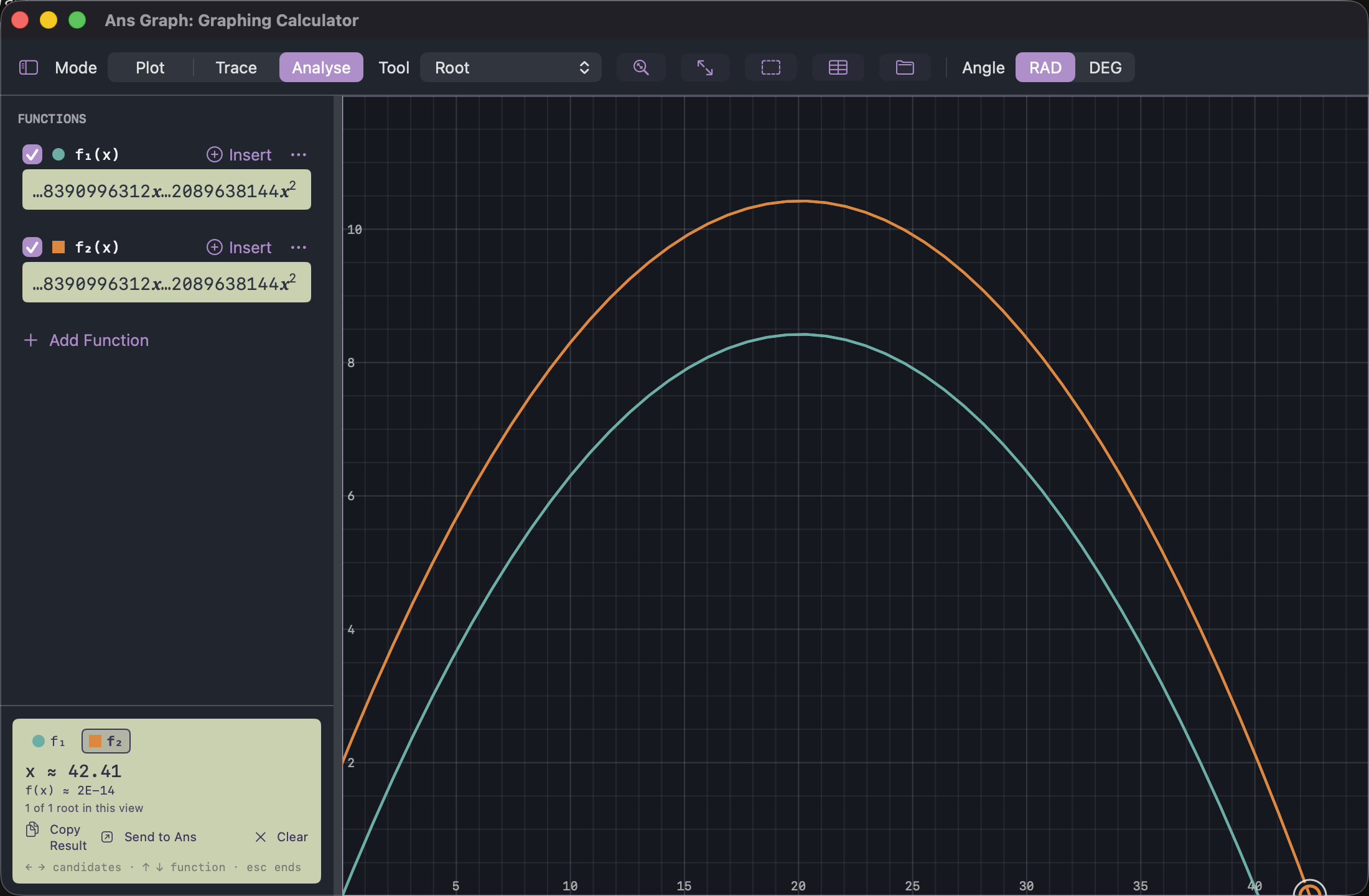 Physics · GCSE to A-level
Projectile motion: the range formula, and where it stops working
40.16 m by formula, the trajectory plotted with its apex and landing point found — then two metres of launch height, which breaks the symmetry the formula depends on and is worth more than the angle.
-
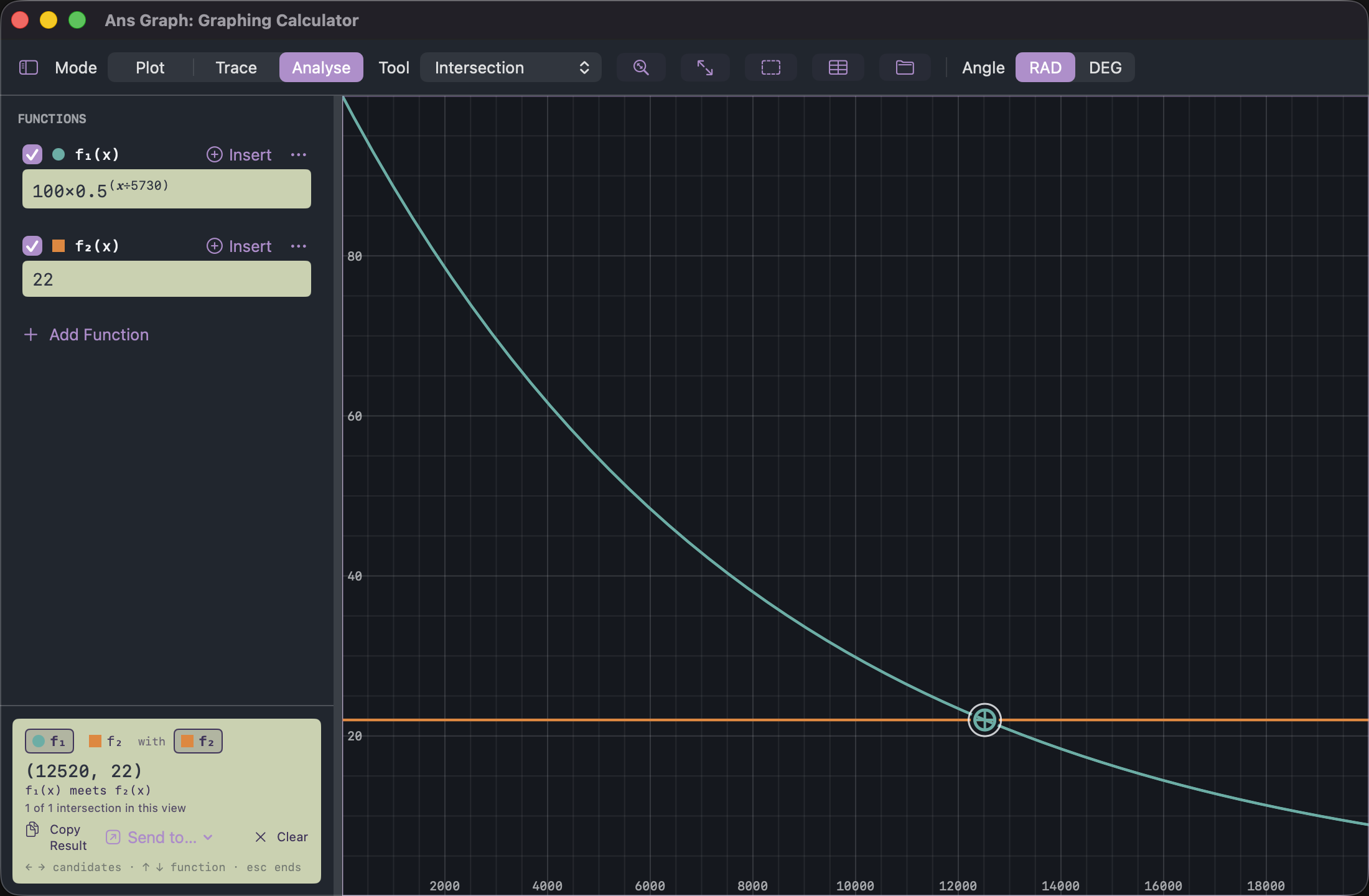 Physics · GCSE to A-level
Carbon dating: reading an age out of what's left
Halving on paper, then the logarithm that handles any fraction, then a real sample dated to about 12,500 years — and the two things that stop that being a calendar date.
-
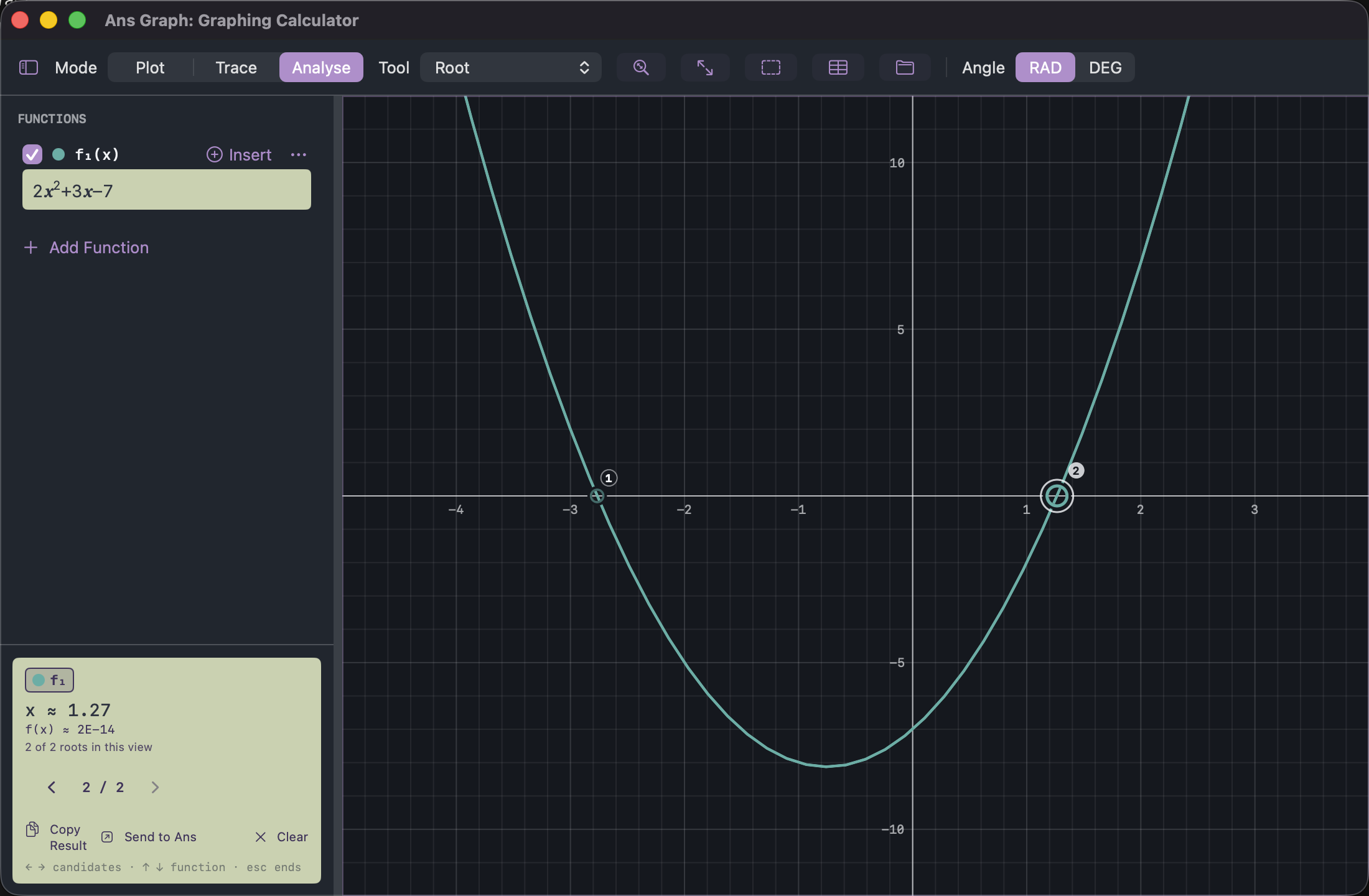 Mathematics · GCSE to A-level
Quadratic equations: by factorising, by formula, and by looking
Factorising, then the quadratic formula with the coefficients in variables, then the roots on a graph — and finally cos x = x, which has no formula and one very definite answer anyway.
-
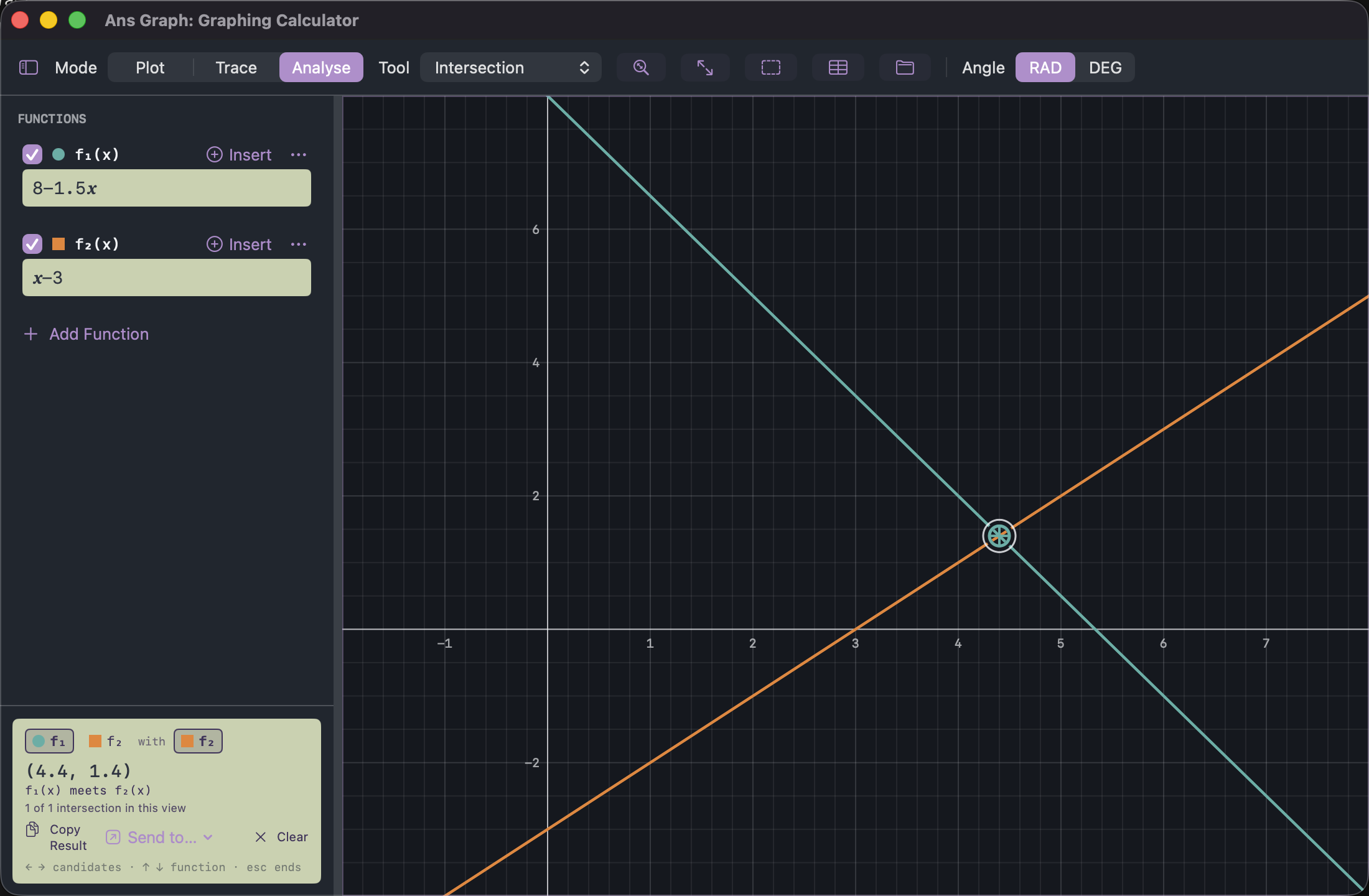 Mathematics · GCSE
Simultaneous equations: where two lines cross
Substitution on paper, then the same answer as an intersection — then a pair that never meets, and a pair that meets twice.
-
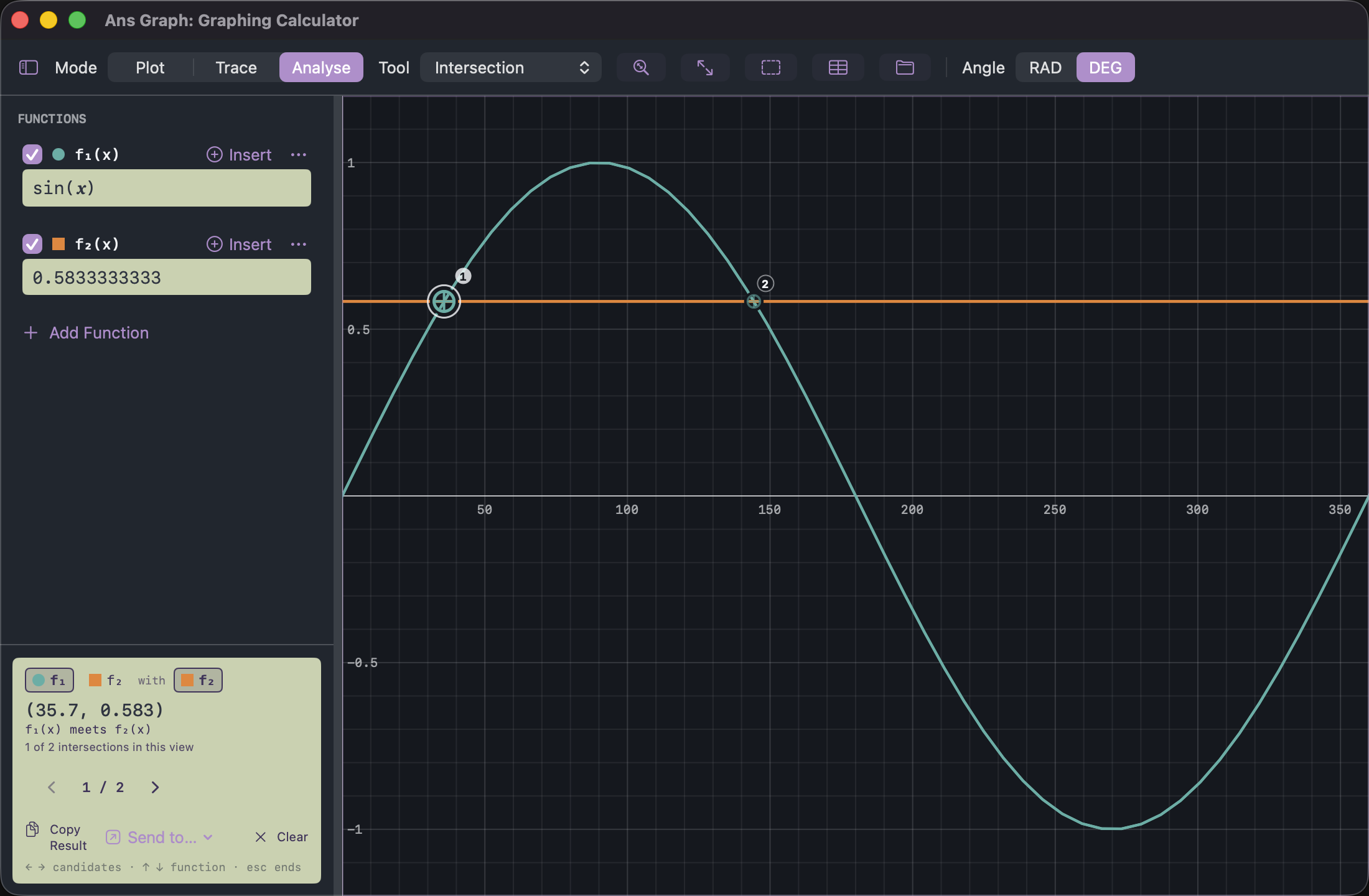 Mathematics · GCSE to A-level
Finding an angle, and why the calculator gives you only one
SOHCAHTOA and inverse sine, the second answer the key never returns, and the cosine rule for a triangle with no right angle.
-
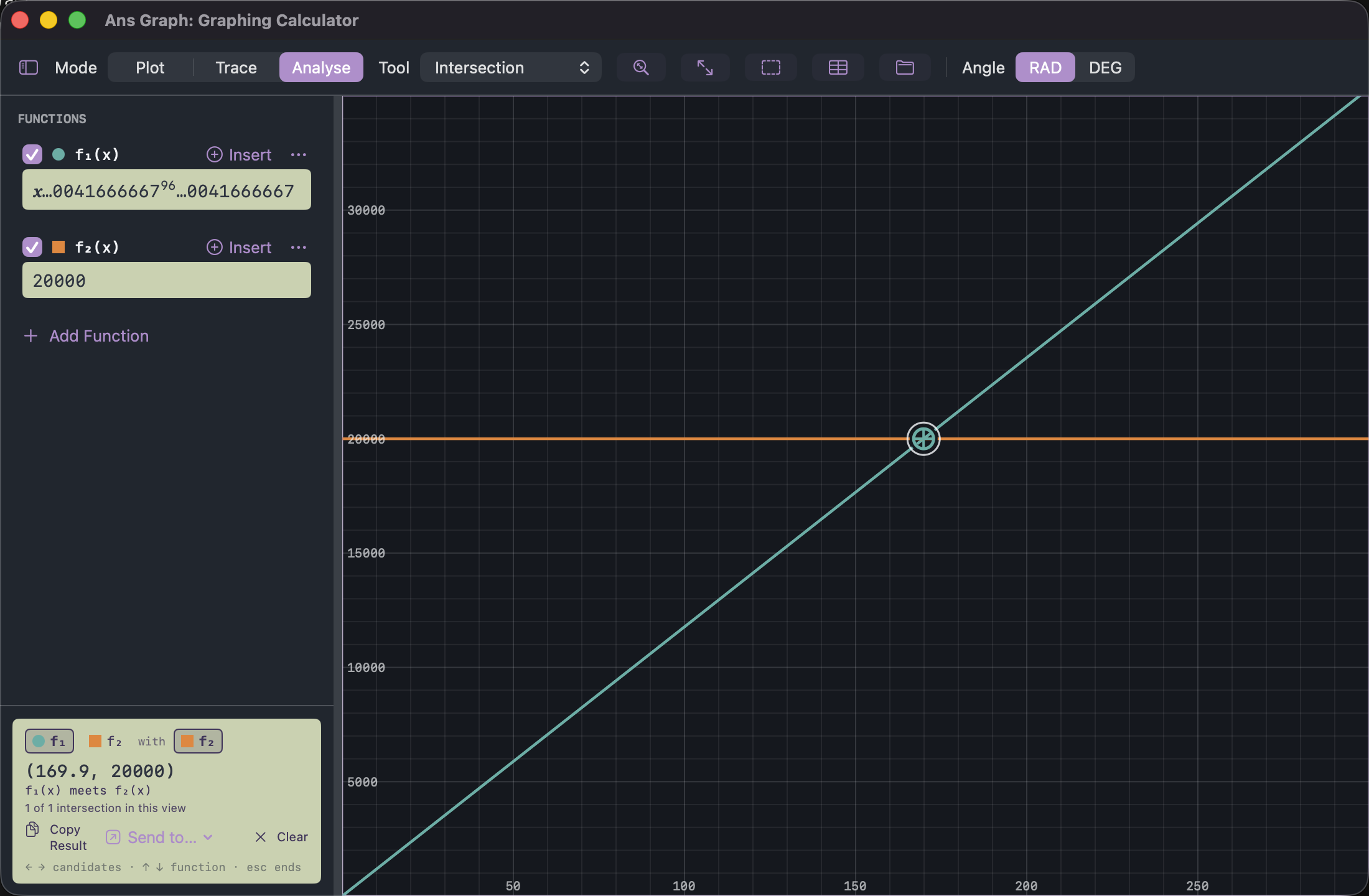 Money · Real life
How much to save a month to reach £20,000
The savings formula rearranged for the payment — £169.87 a month — and a graph with the payment on the x-axis instead of time.
-
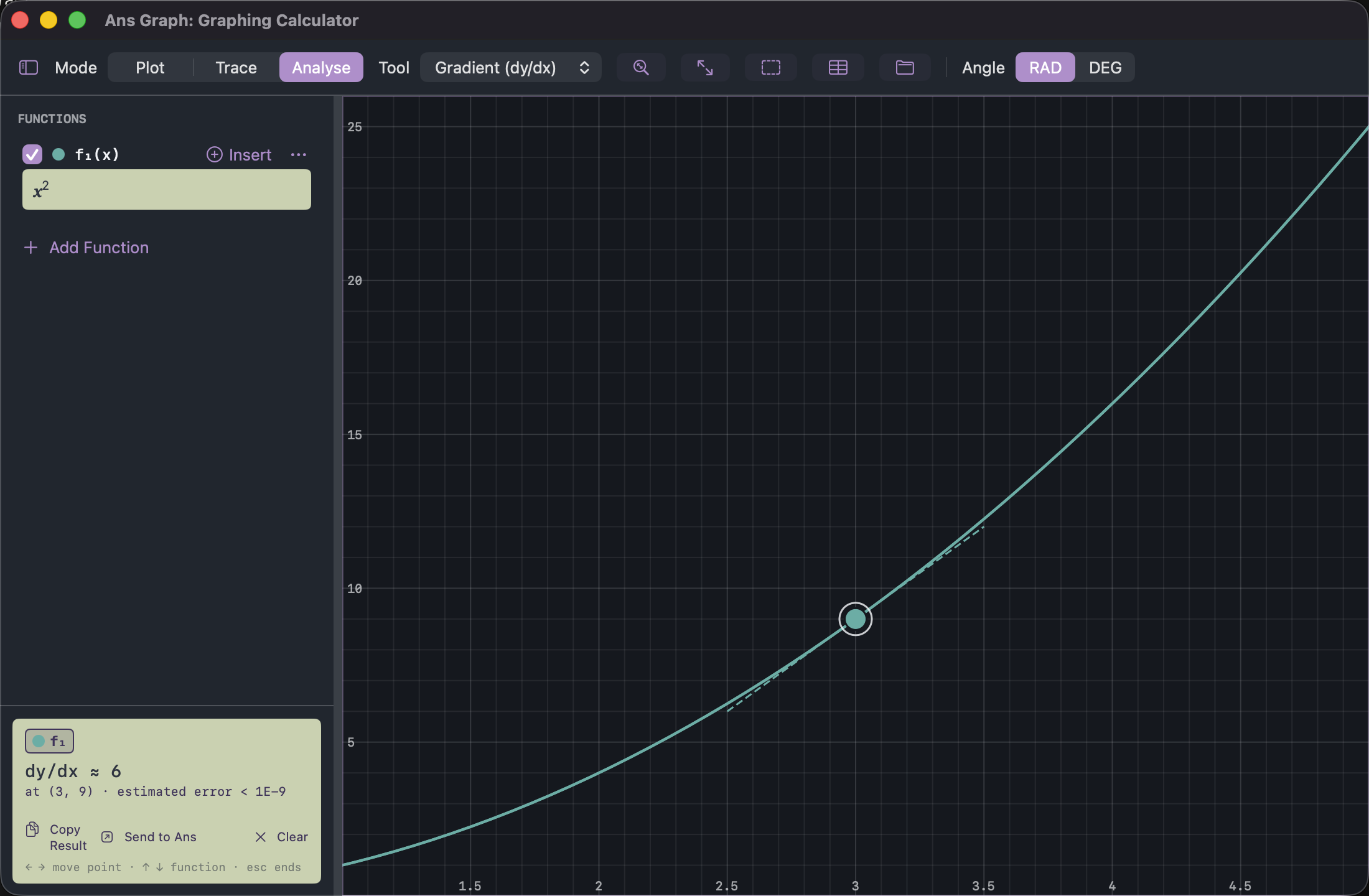 Mathematics · GCSE to A-level
The gradient of a curve, and the tangent that measures it
Chords closing in on 6, the tangent tool agreeing, and then the gradient of a real speed curve — which turns out to be the acceleration.
-
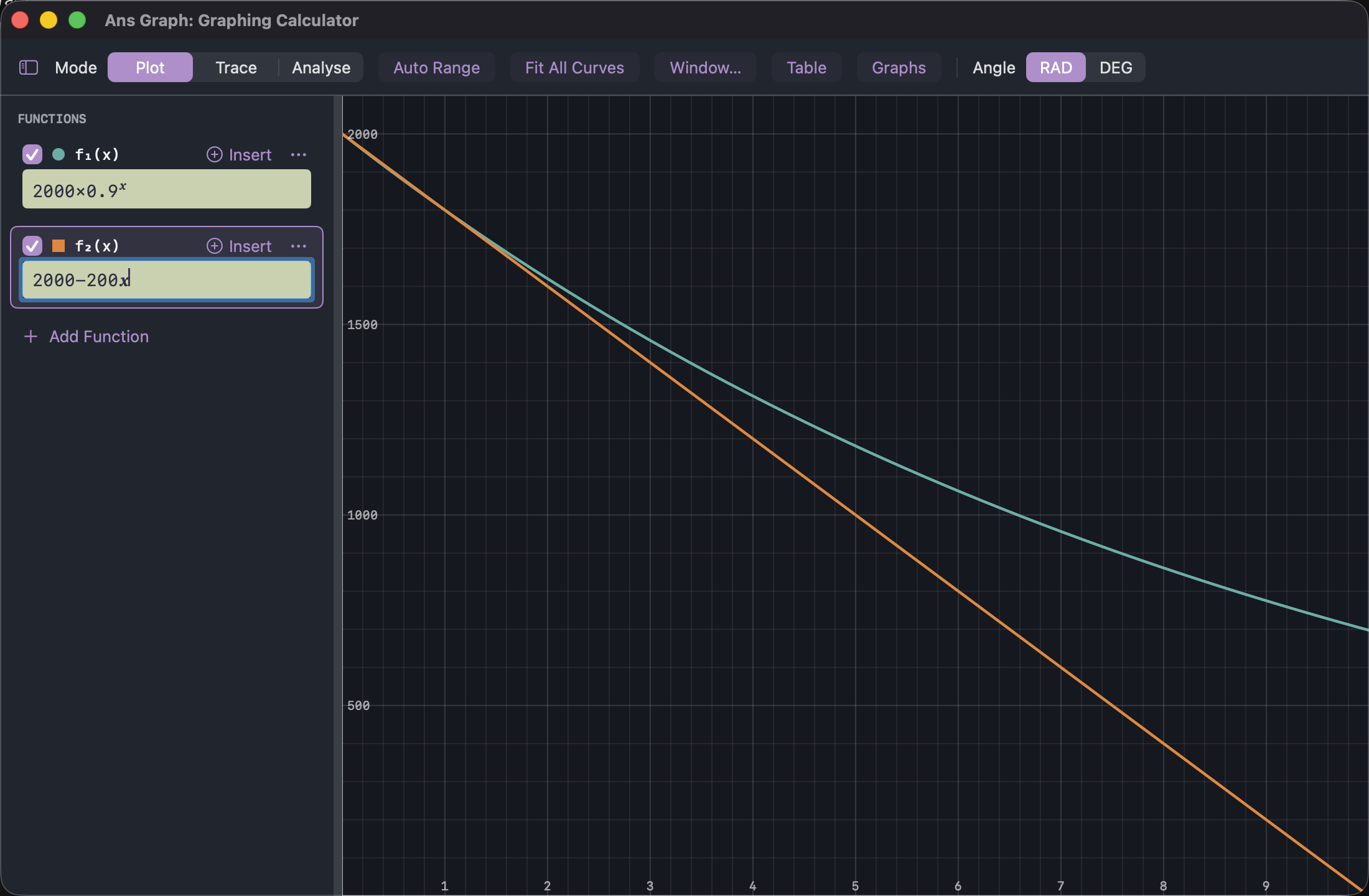 Money · GCSE to real life
Percentage change, and why +20% then −20% doesn't get you back
Percentages as multipliers, the 4% that goes missing, the price before a discount, and what "10% a year" really does over five.
-
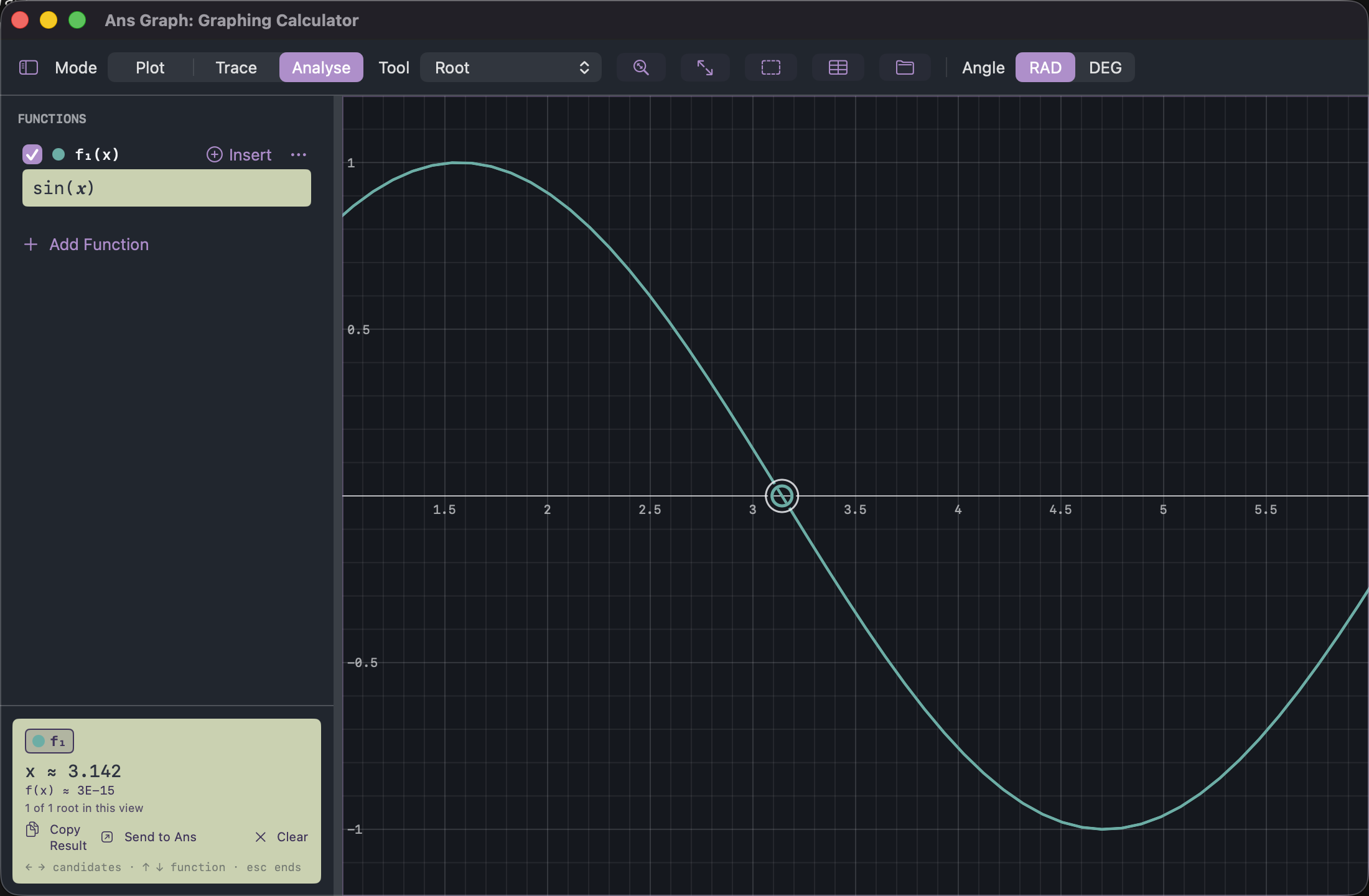 Mathematics · GCSE to A-level
Exact answers, and where they run out
Fractions kept as fractions, sin(π) folding to exactly zero where a rounded π cannot — and the ceiling at 10¹⁰⁰ where the calculator says so rather than guessing.
-
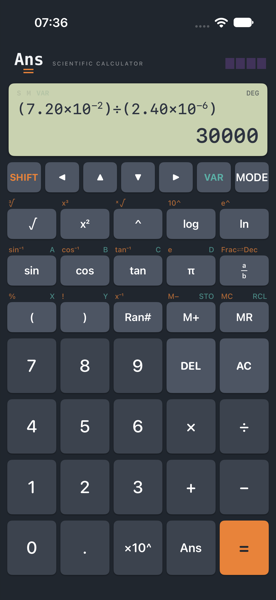 Mathematics · GCSE
Standard form on a scientific calculator: negative powers without input mistakes
The ×10^ key, a 30,000× microscope magnification, millimetres against micrometres, and the sign and unit checks that catch an answer a thousand or a billion times out.
-
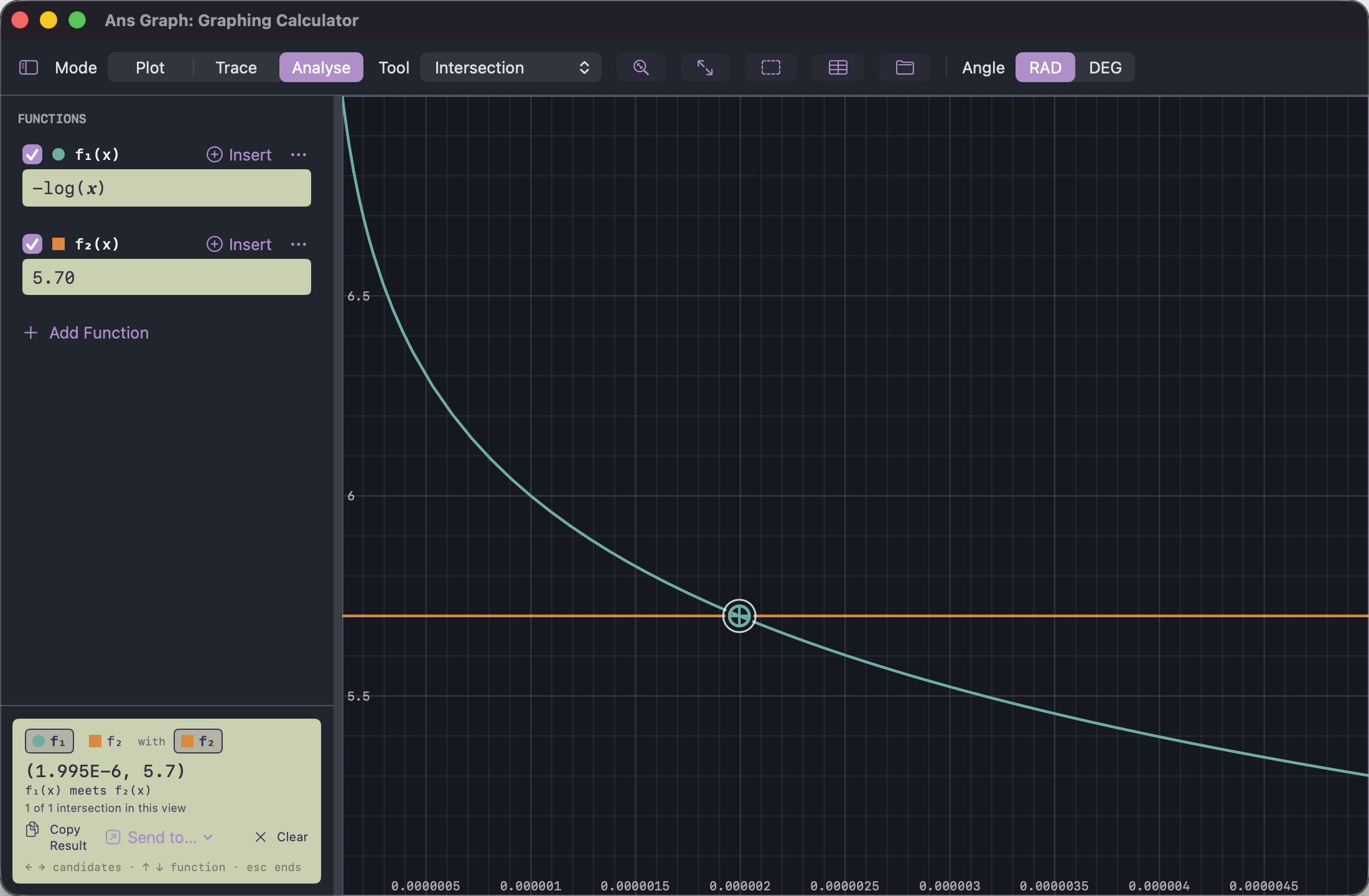 Chemistry · GCSE to A-level
How to calculate pH from hydrogen-ion concentration — and reverse it
−log of 3.2×10⁻⁵, the inverse 10^ key for pH 5.70, a tenfold dilution, and why the digits after the logarithm are not all measurement precision.
-
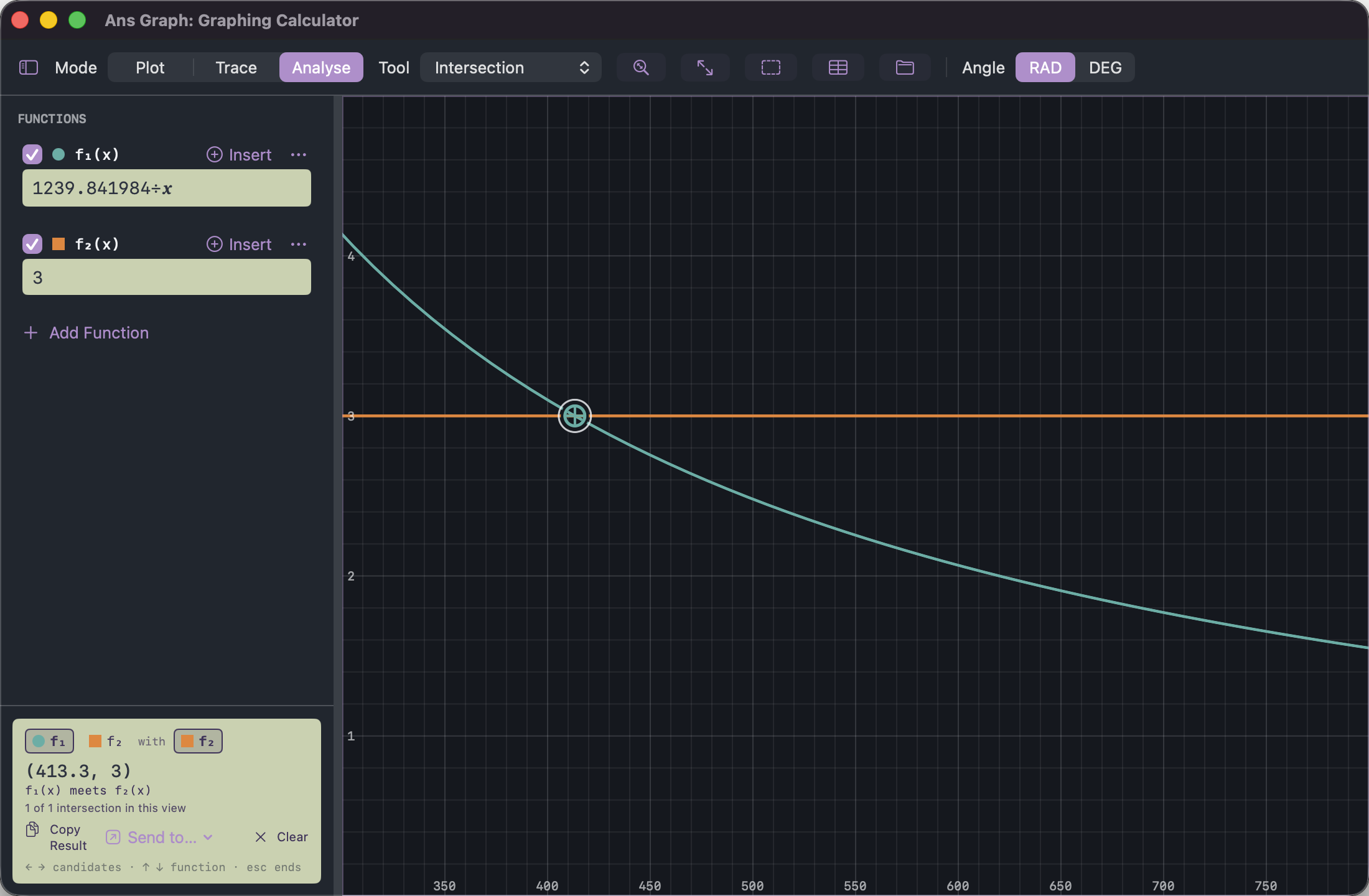 Physics · A-level
Photon energy from wavelength: a 532 nm laser worked in full
Frequency, joules and electronvolts from 532 nm using built-in physical constants — then 3.00 eV run backwards to 413 nm and checked on the reciprocal curve.
-
 Mathematics · GCSE to A-level
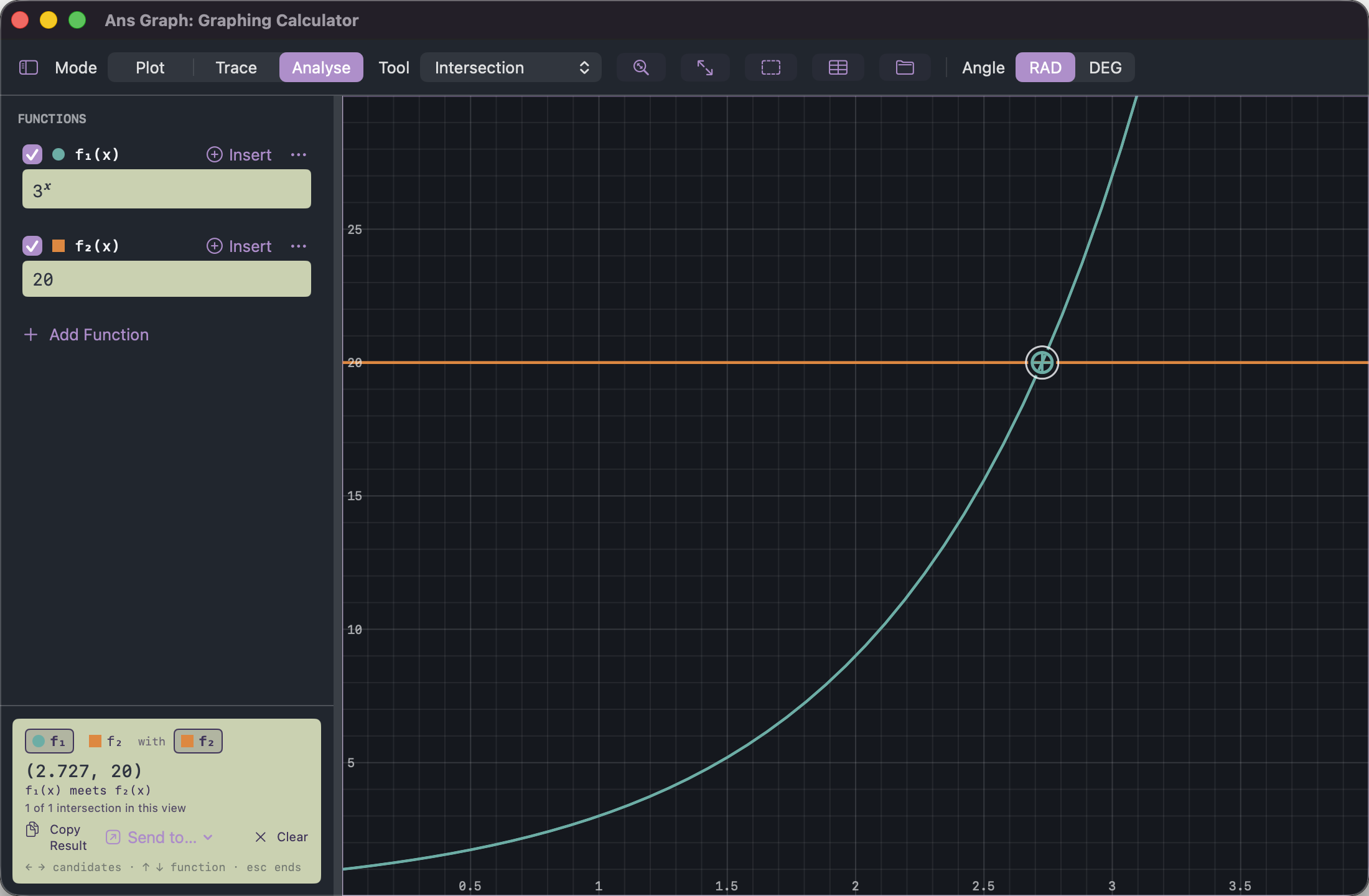
Solving exponential equations with logarithms: 3x = 20
Change of base from first principles, the answer 2.726833028 as an intersection, and the same method used to find when an 18%-growth model has quadrupled.
-
 Statistics · A-level
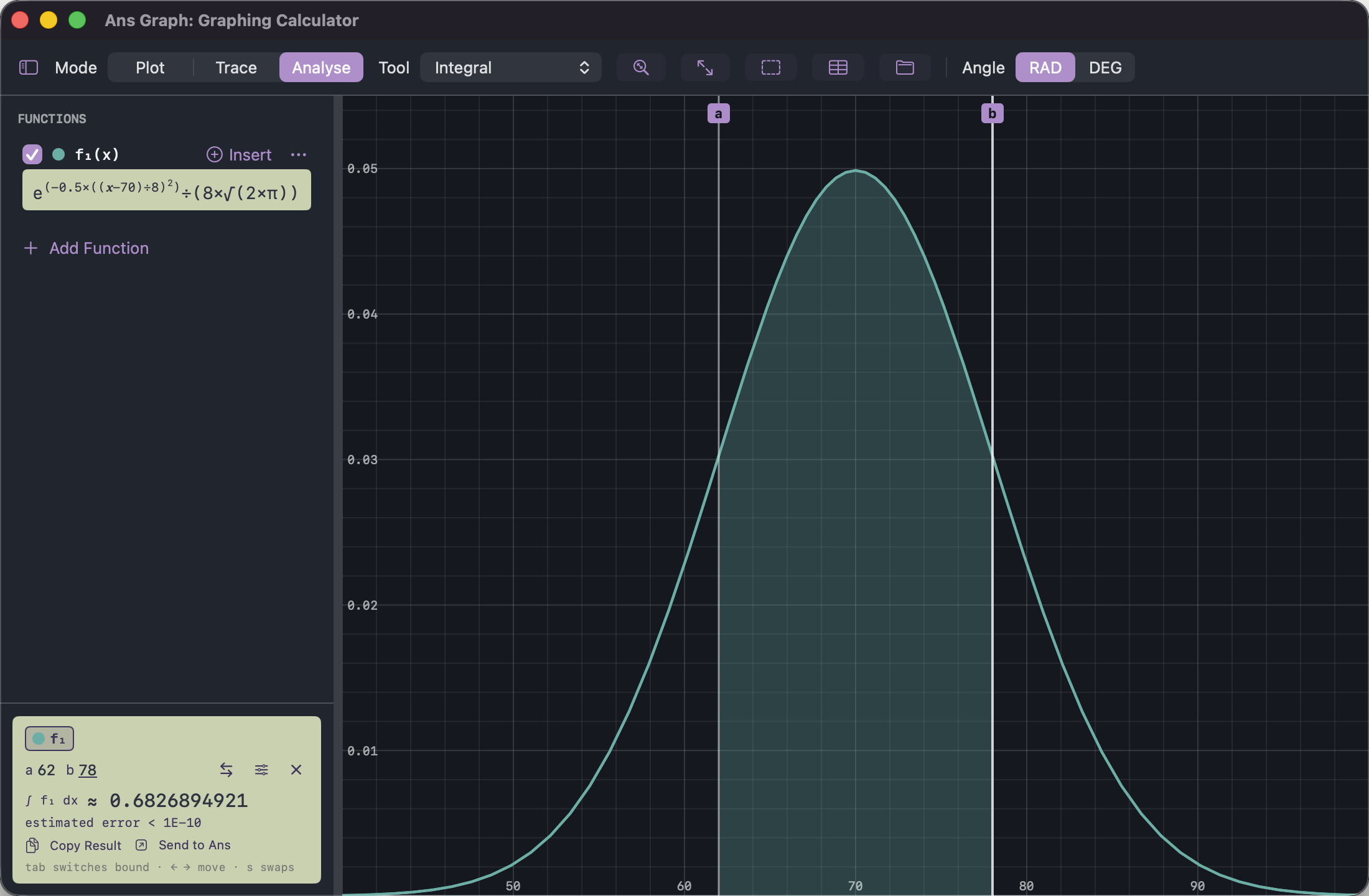
Normal distribution probability: mean 70, standard deviation 8
Standardise 62 and 78, distinguish density height from probability, integrate the 68.27% central area, and find the 2.275% upper tail beyond two standard deviations.
-
 Physics · GCSE to A-level
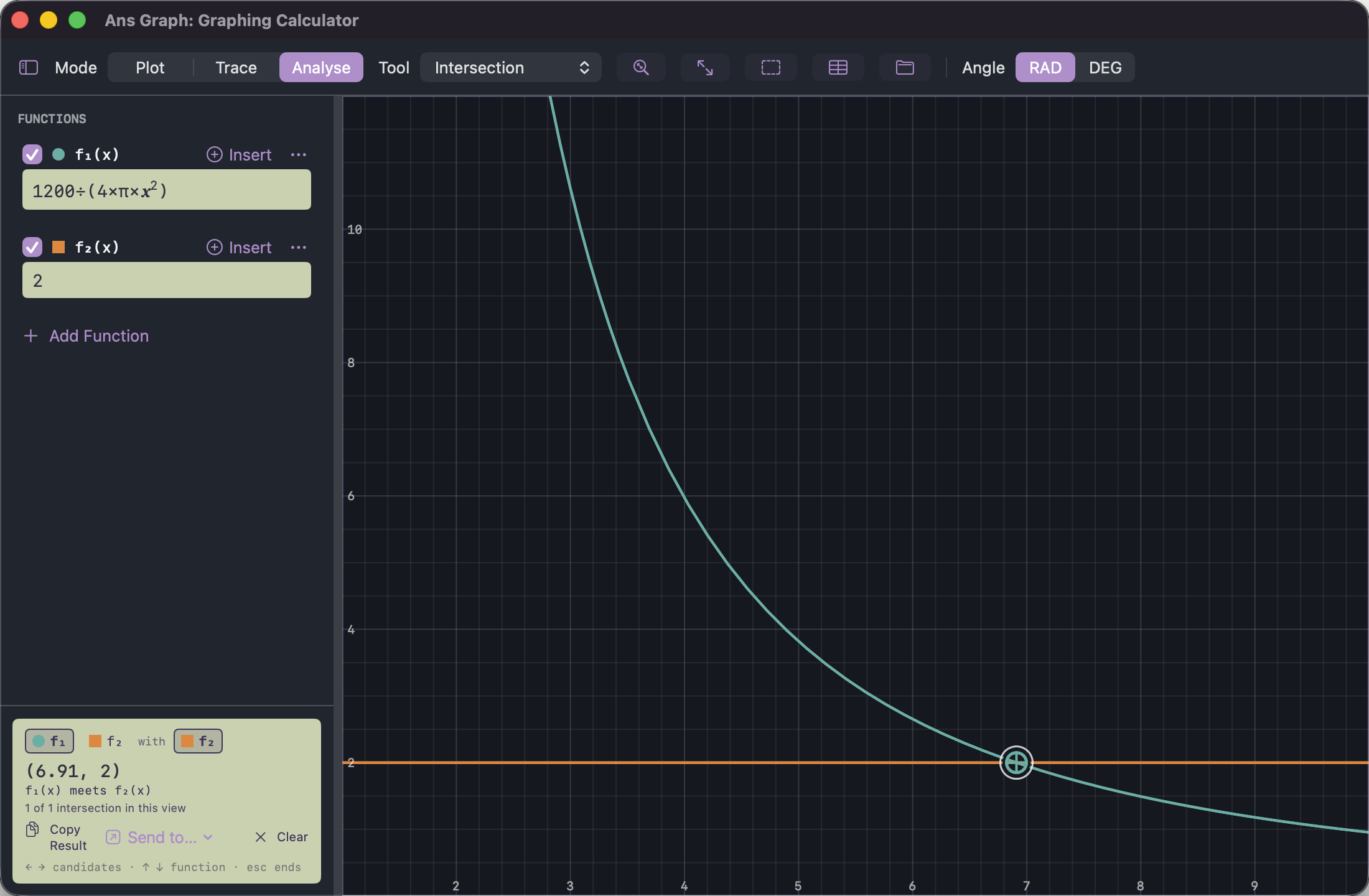
Inverse-square law: intensity from a point source
Why doubling distance quarters intensity, 10.6 W/m² at 3 m from a 1,200 W source, and the 6.91 m threshold found by square root and intersection.
How these are written
Every figure here has been checked twice.
Nothing is quoted from memory. Each number on these pages is produced by the formula shown beside it and verified independently before publishing, and where a result is approximate the page says so rather than rounding the doubt away. The models are ordinary textbook ones — they are stated, along with what they ignore, so you can see exactly where each stops describing the real world.
There is one rule underneath all of it: a number is only printed to the precision it has earned. Arithmetic is exact and quoted in full; a measurement is quoted to the figures the measurement supports; and a numerical result from the graph carries the uncertainty the app states for it. Where those three disagree about the same quantity — and they do, on several of these pages — the disagreement is explained rather than rounded away.
- Free
- No ads
- No tracking
- No account
- Every sum shown in full
These use Ans — a scientific calculator you can own and Ans Graph. Both are paid for once and work offline; the free science calculators will do many of these sums for you in a browser.